




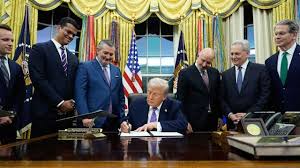
President Trump signed a major executive order that aims to block state artificial intelligence (AI) laws. The order says the federal government must stop states from making rules it sees as harmful to national AI innovation. It creates a special task force to take legal action against state AI laws and tells agencies to review laws that may conflict with a single federal AI standard.
The order also links federal funding to state compliance. States with laws seen as “onerous” could lose certain federal broadband funds. This move arose because Congress failed to agree on a national AI law. Trump’s goal is a unified AI policy so companies do not face 50 different state rules.

However, critics say the order raises constitutional issues. Legal experts note states may fight in court, saying the federal government cannot override state powers so broadly. Some state leaders say AI safety, data privacy and consumer protections should remain state responsibilities.
Both political allies and opponents see hurdles ahead. Even within the Republican Party, some governors argue against federal overreach. As a result, the order’s legal and political challenges could slow or reshape national AI regulation efforts.
#NationalAILaw
#TrumpAIOrder
#StateAILaws
#FederalAIRegulation
#AITaskForce
#AIInnovation
#AIRegulatoryDebate
#LegalChallenges
#PoliticalPushback
#AICompliance